
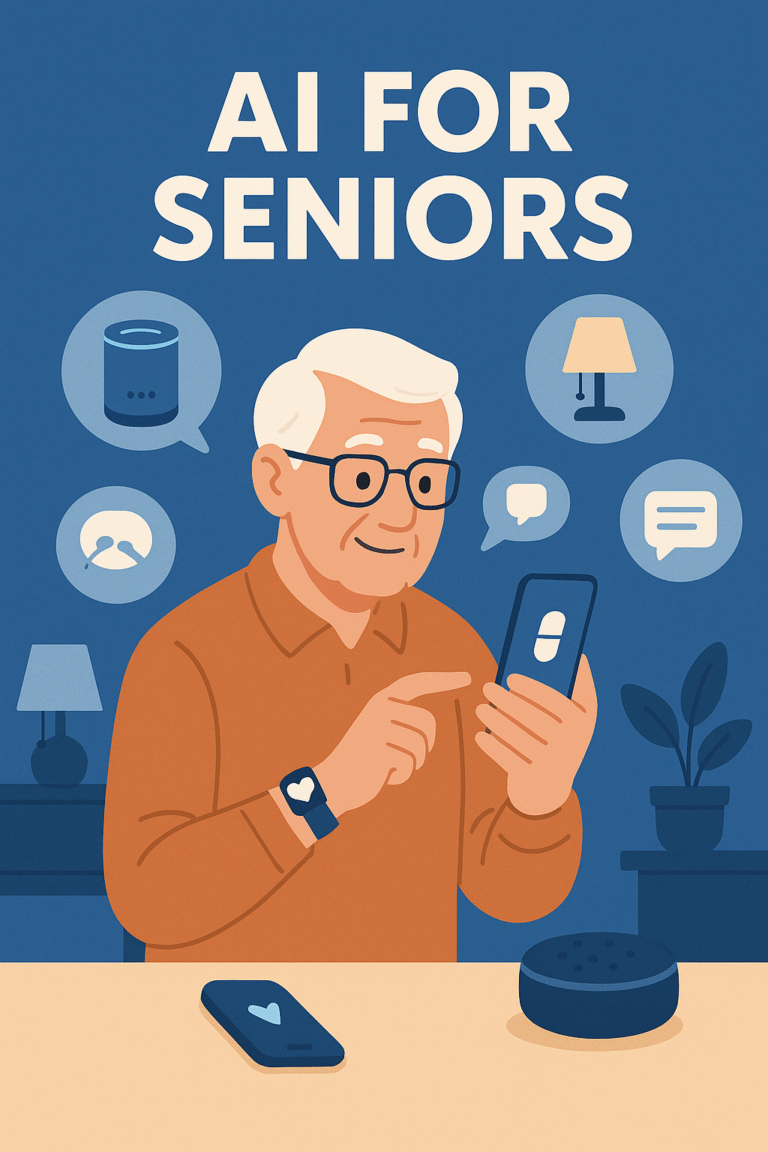

Introduction: AI Isn’t Complicated — It’s Here to Help Seniors Live Better
Technology is moving fast, and many older adults feel left behind. But here’s the truth:
AI (Artificial Intelligence) is not just for younger people. Seniors can use AI every day to stay healthier, safer, and more connected — and most tools are now simple, voice-based, and beginner-friendly.
From helping with medications to preventing falls, reducing loneliness, managing appointments, and even assisting caregivers,
AI has become a powerful digital companion for seniors.
This guide explains exactly how seniors can use AI in health, safety, and daily life — with examples, trusted tools, and step-by-step ideas that are easy to follow.
AI for Health: Smarter Support for Everyday Well-Being
AI offers seniors life-changing support in health monitoring, medication management, and early detection of health issues.
Used correctly, it can improve independence and give peace of mind to both seniors and their families.
1. AI Health Monitoring Tools for Seniors
Modern AI health tools can track vital signs automatically and alert caregivers if something looks wrong. These devices don’t
just collect numbers — they analyze patterns and warn you when attention is needed.
Examples of AI-powered health monitoring devices
- Smartwatches (Apple Watch, Fitbit, Samsung Watch) to track heart rate, sleep, steps, oxygen level, and irregular heartbeat.
- AI blood pressure monitors that detect unusual readings and generate easy-to-read reports for doctors.
- AI glucose monitors that help diabetics follow their blood sugar trends without constant guesswork.
- Fall detection wearables that sense sudden impact and can trigger an emergency alert.
Health benefits for seniors
- Early detection of irregular heartbeat and blood pressure issues.
- Automatic alerts when readings are too high or low.
- Recorded health history that can be shared with doctors.
- More confidence for seniors who live alone.
2. AI Medication Reminder Apps
Missing doses is a common problem for older adults, especially when multiple medications are involved.
AI apps can remove the stress of remembering pills.
What AI medication apps can do
- Send reminders at specific times every day.
- Speak reminders aloud, which helps seniors with low vision.
- Keep a record of missed doses.
- Notify a caregiver if medication is skipped repeatedly.
- Provide refill reminders when pills are almost finished.
Simple voice commands seniors can use
“Hey Google, remind me to take my blood pressure pill at 8 PM.”
“Alexa, what medication do I take this afternoon?”
Why it matters: Better medication habits mean fewer hospital visits and better control of chronic illnesses.
3. AI for Doctor Appointments and Healthcare Management
AI tools can also help seniors stay organised with their medical care. Instead of keeping everything on paper,
AI assistants can track appointments and reminders automatically.
How AI helps with appointments
- Adds doctor visits to a digital calendar.
- Reads out upcoming appointments when asked.
- Sends reminders a day or an hour before.
- Helps join video calls for telehealth sessions.
- Organizes basic health information in one place.
Example voice command:
“Hey Google, when is my next doctor appointment?”
Important health safety note: AI tools can help seniors remember and organize their health,
but they do not replace professional medical advice. Always confirm diagnoses and treatment plans with a qualified doctor.
4. AI Exercise & Wellness Assistants
Staying active is one of the best ways for seniors to stay healthy. AI-powered fitness and wellness tools can guide gentle,
safe exercises at home.
What AI wellness tools can offer
- Low-impact exercise routines specifically designed for older adults.
- Balance and flexibility routines to help prevent falls.
- Daily reminders to move, stretch, or walk.
- Progress tracking with easy charts and friendly feedback.
These tools support strength, mobility, mental health, and sleep quality — all important parts of healthy aging.
AI for Safety: Protecting Seniors at Home and Online
Home safety is one of the biggest concerns for seniors and their families. AI-powered devices and apps can
protect older adults from falls, intruders, and online scams.
5. AI Fall Detection and Emergency Response Systems
Falls are a leading cause of injury for older adults. AI fall detection devices can
automatically sense a sudden impact and trigger a response, even if the senior cannot reach a phone.
How fall detection usually works
- The device detects sudden movement or impact.
- It may ask the wearer if they are okay.
- If there is no response or a “no,” it contacts an emergency number or family member.
- Some devices share GPS location with responders or caregivers.
This kind of AI support can significantly reduce the time a senior spends on the floor after a fall and
can help prevent serious complications.
6. AI Home Security for Seniors
AI-powered home security systems are easier to use than traditional alarm systems and can often be
controlled with a simple app or voice commands.
Useful AI home safety tools
- Smart doorbell cameras that show who is at the door before opening.
- Smart smoke and carbon monoxide detectors that send alerts to phones.
- Smart lights that turn on automatically when someone walks into a room.
- Smart plugs that can turn off appliances if they are left on too long.
- Whole home monitoring systems that learn normal activity and alert family when something is unusual.
For seniors, these tools can mean fewer risks from strangers at the door, dark hallways, or forgotten appliances.
7. AI for Digital Safety and Scam Protection
Sadly, many scams target older adults. AI can act like a digital bodyguard to help protect seniors online.
How AI improves digital safety
- Filters suspicious emails and marks them as spam.
- Warns against unsafe or fake websites.
- Blocks dangerous pop-ups and unwanted downloads.
- Monitors bank accounts for unusual activity (in some financial apps).
Practical digital safety tip: if an email, link, or phone call feels suspicious, a senior can ask an AI assistant:
“Is this email safe?”
“Is this website real?”
“Is this phone number a scam?”
While AI can’t catch everything, it adds an extra layer of protection and gives seniors guidance before they respond.
AI in Daily Life: Making Everyday Tasks Easier
Beyond health and safety, AI can make ordinary daily tasks easier and more enjoyable. From simple voice commands
to automatic reminders, AI can feel like a friendly helper in the home.
8. AI Voice Assistants for Everyday Convenience
Voice AI is one of the most senior-friendly technologies available today. There’s no need to type or navigate menus —
seniors can simply speak.
What seniors can do with voice assistants
- Call family and friends without touching the phone.
- Set alarms, timers, and daily reminders.
- Ask about the weather, news, or time.
- Control lights, smart plugs, or the TV (if connected).
- Create shopping lists and to-do lists.
- Search the internet by asking questions out loud.
Helpful voice command examples
“Alexa, call my daughter.”
“Hey Google, remind me to drink water every two hours.”
“Siri, turn on the living room lights.”
For seniors with mobility challenges, vision loss, or arthritis, voice control can make daily life much more comfortable.
9. AI for Managing Daily Tasks, Bills, and Errands
Keeping track of bills, appointments, and errands gets harder as life gets busier. AI can act like a personal assistant
that never forgets.
Examples of tasks AI can handle
- Schedule bill payment reminders.
- Organize appointments in a calendar.
- Generate and update shopping lists.
- Plan meals and remind when to start cooking.
- Create a simple daily checklist for morning or evening routines.
Example:
“Hey Google, remind me to pay my electricity bill on Monday at 9 AM.”
The assistant saves the reminder, repeats it back clearly, and alerts the senior at the right time. This can be especially
helpful for older adults who worry about forgetting important tasks.
10. AI for Social Connection and Reducing Loneliness
Many seniors feel isolated, especially if family lives far away. AI can’t replace human connection, but it can help make it
easier to stay in touch and feel less alone.
Ways AI supports social connection
- Starts video calls with simple voice commands.
- Reads text messages aloud and helps compose replies.
- Translates speech or captions for those with hearing difficulties.
- Encourages daily check-ins and conversations.
- Provides friendly, casual chat through AI companions.
Some devices designed specifically for seniors can even suggest activities, ask how they are feeling, and remind them to
reach out to family members.
11. AI for Organizing Photos and Digital Memories
Many older adults have thousands of photos spread across phones, computers, and old albums. AI can help turn this
digital clutter into organized memories.
What AI photo tools can do
- Group photos by people, places, or events.
- Automatically remove duplicates and blurry images.
- Enhance old or faded pictures.
- Create digital albums and slide shows.
- Help find specific memories quickly by date or keyword.
Example voice request:
“Hey Google, show me pictures from Christmas 2018.”
Instead of scrolling endlessly, seniors can relive special moments instantly with just a few words.
12. AI for Fun, Learning, and Entertainment
AI is not only practical — it can also bring fun and creativity into everyday life.
Entertainment ideas using AI
- Play favourite music or old radio shows.
- Ask for jokes, trivia, or fun facts.
- Generate short stories or bedtime tales for grandchildren.
- Get recipes and step-by-step cooking instructions.
- Listen to audiobooks read aloud by AI.
- Play brain games that challenge memory and thinking skills.
These activities help keep the mind active and can make quiet days feel more lively and engaging.
Using AI Safely: Simple Rules Seniors Should Follow
As helpful as AI can be, it is important to use it safely. The goal is to enjoy the benefits of technology without putting
personal information or health at risk.
13. Essential AI Safety Rules for Seniors
- Always verify medical advice with a real doctor. AI can provide general information but is not a replacement for professional care.
- Never share sensitive personal details such as bank account numbers, passwords, or ID numbers with any app or assistant unless you are certain it is secure and legitimate.
- Be careful with links and attachments. Ask a trusted person or use security tools if something looks suspicious.
- Use only trusted apps from official stores like the Google Play Store or Apple App Store.
- Keep devices updated so they have the latest security protections.
How Caregivers Can Use AI to Support Seniors
AI is not only helpful for seniors themselves; it can also support caregivers, family members, and health professionals.
Ways AI supports caregivers
- Provides daily or weekly health summaries.
- Sends alerts after a fall or unusual inactivity.
- Shows whether medication reminders are being followed.
- Helps coordinate appointments and share information among family members.
- Gives caregivers peace of mind when they cannot be physically present.
Used thoughtfully, AI can strengthen the partnership between seniors and caregivers, allowing both to feel more confident and less stressed.
Conclusion: AI as a Helpful Companion for Senior Life
AI is not about replacing human contact or making life more complicated. When used the right way, it becomes a helpful
companion that:
- Supports health and medication routines.
- Improves safety at home and online.
- Makes daily tasks easier and more organized.
- Encourages social connection and reduces loneliness.
- Helps seniors stay independent for longer.
Seniors do not need to understand every technical detail to benefit from AI. Starting with a simple voice assistant,
a medication reminder app, or a health monitoring device is often enough to experience real improvements.
At AIGuideForSeniors.com, our goal is to make technology feel friendly, safe, and useful for older adults
and their families. With the right guidance, AI can help seniors lead healthier, safer, and more confident lives every day.